Marketing Strategy
An Influencer Without a Strategy Isn’t Marketing. It’s a Joke.
It’s easy to blame creators when a marketing deal goes sideways. We’ve all heard the complaints about high prices, inflated metrics, or missed deadlines. But the real breakdown usually happens before any of that. It starts when brands and creators skip the most critical step: defining a clear strategy and setting actionable goals together. When we fix the foundation, everyone wins.
29 September 2026
Why the trend of Influencers Grew
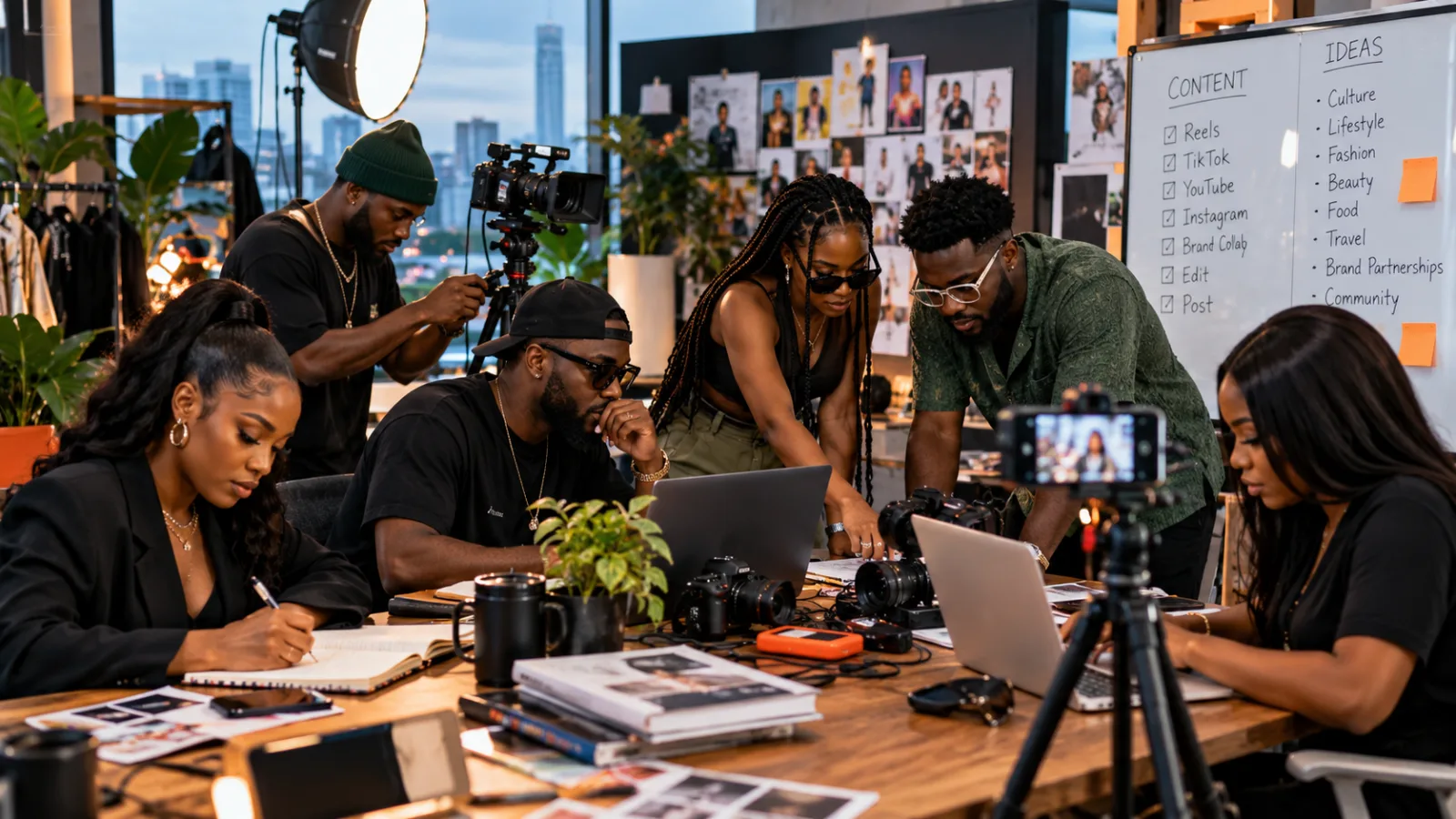
A decade ago, an influencer was just a person with a smartphone and a crowd. Today, that crowd moves billions, and money moves faster than the industry’s maturity.
Nigeria’s influencer market has exploded fivefold since 2021, hitting a massive ₦161.4 billion, according to the DottsMediaHouse's Nigeria Influencer Marketing Report. Globally, it’s a similar story: SocialPilot data shows the industry hyper-scaling from $10 billion in 2020 toward a staggering $34 billion in 2026.
Globally, it’s a similar story: SocialPilot data shows the industry hyper-scaling from $10 billion in 2020 toward a staggering $34 billion in 2026.
Why the rush? It’s simple. Traditional ads had died. Audiences stopped looking at billboards and started looking at human beings. An authentic mention from a creator you already watch beats a corporate banner every single time. Brands didn’t discover magic; they realized billboards no longer worked and chased eyeballs where they went.
As big brands poured cash into top-tier talent, the mid-tier and smaller creators were left in the Wild West, navigating chaotic pricing, public call-outs, and zero standardization. But even as regulatory frameworks and industry benchmarks catch up, the marketing still flops. Why? Because business owners tend to spend before they think.
Case Study: What Strategic Failure Looks Like
Fekomi Wellness founder Adefemi Komiyo Lawrence is a good example. In May 2026, Lawrence dropped a viral rant detailing his influencer horror stories: Sydney Talker allegedly quoted him ₦20 million; Allegedly, Shank wanted ₦12 million for a single video; while Ola of Lagos and Carter Efe took the cash and ghosted on the deliverables entirely. Frustrated, Lawrence concluded that since 95% of an influencer’s audience never buys anything, paying for reach is a scam.
It’s easy to treat this as a pricing dispute. It isn’t.
Lawrence had no framework to audit whether those followers were real, no mechanism to enforce delivery, and zero clarity on what he was actually purchasing beyond a vanity metric on a screen. Every single complaint in his video- the inflated rates, the ghosting, the burnt capital- traces back to one missing step: Nobody defined what success looked like before signing the check.
This isn’t a talent problem. It’s a strategy problem wearing a talent problem’s clothes.
Digital Trust Doesn’t Cut it Anymore.
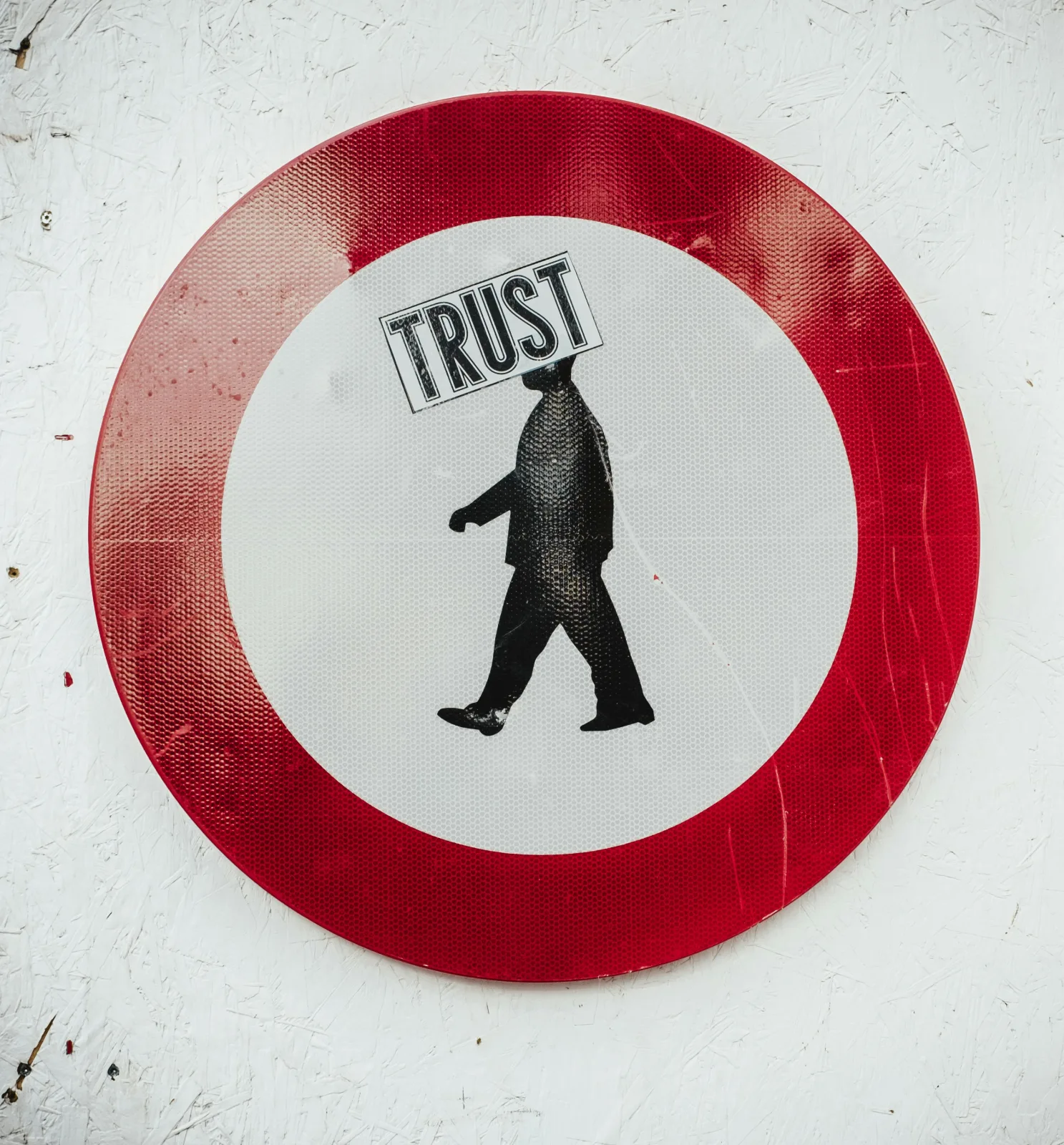
Let’s be real: the reason why Influencers are chosen is because of trust and lately, that trust is taking a beating.
There have been cases of Outright Fraud: Look at Okoro Blessing Nkiruka (Blessing CEO). In June 2026, the EFCC arraigned her on six counts of fraud after she faked a stage-four breast cancer diagnosis with a forged histopathology report to solicit money from her followers. She had told her followers she had stage-four breast cancer and could not afford treatment, backed by a forged histopathology report. Ordinary Nigerians sent money they could not spare. The case is still before the Federal High Court in Lagos.
Fake influence is not new either, and Nigeria has repeatedly run this experiment. A public relations firm paid Nigerian influencers and journalists to run a coordinated campaign defending a Colombian national facing money laundering charges abroad. Twitter suspended more than 1,500 accounts tied to the manipulated hashtags once it traced the paid engagement. The lesson held: an audience can be rented, but only until someone checks who’s paying the bill.
Case Study: What Strategy Actually Looks Like
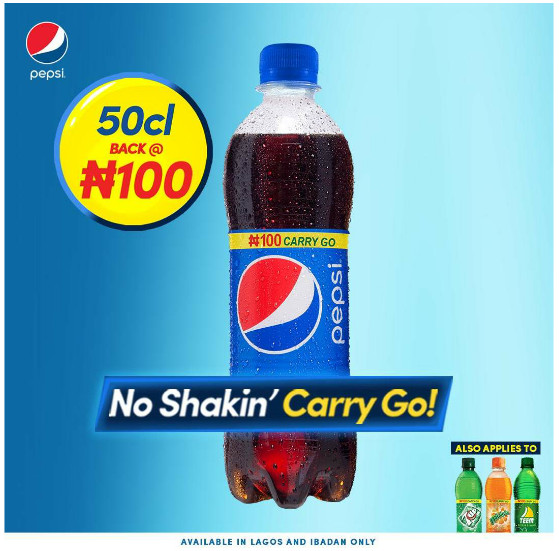
Compare Lawrence’s chaotic experience with Pepsi’s legendary “No Shakin' Carry Go” campaign. Back in 2017, Lagos vendors were quietly selling Pepsi’s 50cl bottle above its ₦100 retail price. Pepsi had one clear, non-negotiable objective: force the ₦100 price point back into the consumer’s mind.
The influencer tier matched the product. Pepsi is a mass-market, low-consideration drink, so the campaign leaned on popular Nigerian musicians and comedians and let them show the product inside everyday moments- cooking, shopping, hanging out- rather than staging a glamour shoot no viewer could see themselves in. The content had a job: make the price point feel like relief, not a discount campaign.
The result was over 22 million views and roughly 76,000 user-generated videos of Nigerians making their own No Shakin' Carry Go content. Seven Up Bottling Company has repeated the underlying formula every December since, which is what a strategy looks like when it works.
It gets reused on purpose, not reinvented from scratch because the last attempt left nothing to build on. Nobody at Pepsi woke up and decided six comedians would sell soda. Somebody first decided what “worked” meant, then picked people who could produce it. That’s strategy.
Chivita’s “Everyone Has a Chivita” campaign followed the same logic from a different angle. Instead of one big face, it activated influencers across different Nigerian regions, letting each one create personal content about moments that mattered to them, which read as lived experience rather than a script handed down from a media plan.
Two different brands, two different budgets, and the same underlying decision: define what the content has to prove before choosing who says it.
How Not to Burn Your Money
Before any influencer reaches a shortlist, a business owner has to answer one question honestly: what is this partnership supposed to produce?
Reach, clicks, and sales are three different outcomes, and each calls for a different influencer. A brand introducing a new product can afford a bigger, broader audience built for awareness.
A brand trying to sell cannot, because a following that watches but never buys is not an audience. It’s an algorithm accident with good lighting.
What are you trying to buy? Is it brand awareness? If you care about direct sales, then avoid mega-influencers whose audiences only watch but rarely buy. An unengaged crowd isn’t an audience; it’s an algorithm accident with good lighting. When it comes to metrics, define your single source of truth before signing: promo code uses, link clicks, direct conversions, or net new followers.
Check the audience before you check the price
A million followers mean nothing if they live on another continent or can’t afford your product. A follower count says nothing about whether those followers can afford, need, or even live near what the brand sells.
A skincare business selling in Lagos gains nothing from a following spread across five countries and three age groups it doesn’t serve. A big number on a profile is not due diligence. It’s a number.
None of this requires a legal team or a big budget. HypeAuditor's free Instagram audit tool flags sudden follower spikes and low engagement relative to audience size, both signs of purchased followers. An engagement rate check, a look at who is actually commenting and where they’re based, and a platform-level audience breakdown all cost nothing and take less time than negotiating the price.
The same logic applies to fit. An influencer whose audience already talks about skincare, fitness, or finance brings the following primed to act on a related product. An influencer picked because they’re simply large brings a following primed to act on nothing in particular, which is exactly the following Lawrence paid for.
Betway’s strategy is not a template. It’s proof of the same rule.
Betway makes the same point from the other side. The brand goes after the biggest names it can find, naming Don Jazzy its Nigeria brand ambassador in June 2026, reaching for a founder of Mavin Records whose personal following crosses millions of fans across music and culture.
That works for Betway because betting is a mass-market, low-consideration product. Almost anyone with a phone and some spare cash is a potential customer, so being seen by as many people as possible is a reasonable strategy.
A business selling something narrower, something people compare, research, or need to trust before they buy, cannot borrow that logic. Betway’s strategy isn’t proof that size wins. It proves size only wins when the outcome you need is reach, and most businesses don’t need reach. They need convertions, which is a completely different shopping list.
A contract protects a strategy. It can’t replace one.

A verified audience and a defined outcome still won’t protect a business if the paperwork behind them is thin. Four clauses do most of the protecting, and skipping any of them is how a handshake becomes a court date.
- Content ownership. Under Nigeria’s Copyright Act 2022, copyright vests initially in the author unless a written agreement assigns or licenses it elsewhere. A brand that pays for a video without a written usage clause does not automatically own the right to repost it, boost it as an ad, or use it after the campaign ends. The contract should specify the channels, the duration, and whether paid amplification is included.
- Disclosure. ARCON’s rules require influencers to clearly disclose paid partnerships, and a vague hashtag buried at the end of a caption doesn’t meet that bar. The approved disclosure needs to sit as the first hashtag, or somewhere the average viewer can’t miss it.
- Withholding tax. Payments to influencers in Nigeria are subject to withholding tax, and a contract that doesn’t say whether the quoted fee is gross or net of it is a dispute waiting for payment day.
- Breach and termination. What happens if the influencer posts late, skips the disclosure, or never delivers, the way Lawrence said happened to him? Without a termination clause naming the recourse, a business is left arguing after the fact instead of pointing at the paragraph that already settled it.
None of these clauses fix a partnership that started without a strategy. They only protect a business once it has one, the same way a seatbelt doesn’t stop the crash.
Don’t forget about the Regulators.
ARCON’s Advertising Standards Panel requires adverts targeting the Nigerian market to get pre-approval before they run, with a fine of up to ₦1,000,000 per infraction.
That rule existed before 2026 but was rarely enforced online. It hardened after the CBEX scam, in which Nigerians reportedly lost an estimated ₦1.3 trillion to an unapproved online scheme, pushing ARCON to issue a directive in May 2025 requiring influencers, content creators, and advertisers to secure approval before any advert goes live.
Enforcement since has included fines of ₦1 million per unapproved post on platforms like Instagram, with the vetting backlog and fee structure now straining smaller brands as much as the disputes it was meant to prevent. Nigeria didn’t build this bureaucracy out of enthusiasm. It built it because enough of the industry proved it couldn’t be trusted to disclose a paid post on its own.
Read more: https://ddfconsulting.co/writing/before-enforcement-there-has-to-be-a-way-in/
The Bottom Line
Influencer marketing isn’t broken, and businesses shouldn’t stop using it. But choosing the right influencer goes beyond follower counts and likes, and it definitely goes beyond price. Put Lawrence and Pepsi side by side, and the difference isn’t budget, fame, or luck. Pepsi decided what the campaign had to prove before it chose anyone to say it. Lawrence decided who to pay before he decided what he was buying.
An influencer is a tool. Used with a strategy, it’s marketing. Used without one, it’s a bet, and many business owners like Lawrence already showed the country what happens when that bet doesn’t pay off. Trust doesn’t start with the contract.
It starts before the contract is written, with two checks done in order: proof that the audience is real, and a defined outcome the campaign is actually being paid for, agreed before the invoice, not argued about after.
Stop picking talent based on vibes, follower count and price. Audit the audience, set the metric, lock down the contract, and make sure you know what you’re buying before you send the invoice.
Sources
- DottsMediaHouse, NIMR 2026: Nigeria Influencer Marketing Report
- ITWeb, South African virtual influencer to host Google’s AI in Action event in Nigeria
- The Cognitive Revolution / GetCoAI, AI influencer Kenza Layli wins inaugural Miss AI crown.
- Chain Reactions Africa, Influencer Marketing in Nigeria: Best Practices and Case Studies (Pepsi, Chivita)
- MarketingEdge Nigeria, Insight Publicis and the No Shakin' Carry Go campaign
- HypeAuditor, free Instagram audit tool
- Guardian Nigeria, Betway appoints Don Jazzy as brand ambassador for Nigeria.
- Afriwise, Influencer and Digital Marketing Regulation in Nigeria
- BusinessDay Nigeria, Businesses strained under ARCON’s vetting regime.
- BusinessDay Nigeria, ARCON fines businesses N1m for unapproved online ads
- https://www.channelstv.com/2026/06/10/efcc-arraigns-blessing-ceo-over-fresh-alleged-%E2%82%A613m-fraud/