Regulation
Before Enforcement, There Has To Be A Way In
In the UK, a business needs nobody's permission to run an ad, because the regulator says checking them all first would be impossible. South Africa is the same. Kenya asks up front only on gambling. In Nigeria every ad aimed at Nigerians is supposed to be approved before it runs, your boosted post included, and ARCON has built the enforcement without building a way in.
19 August 2026
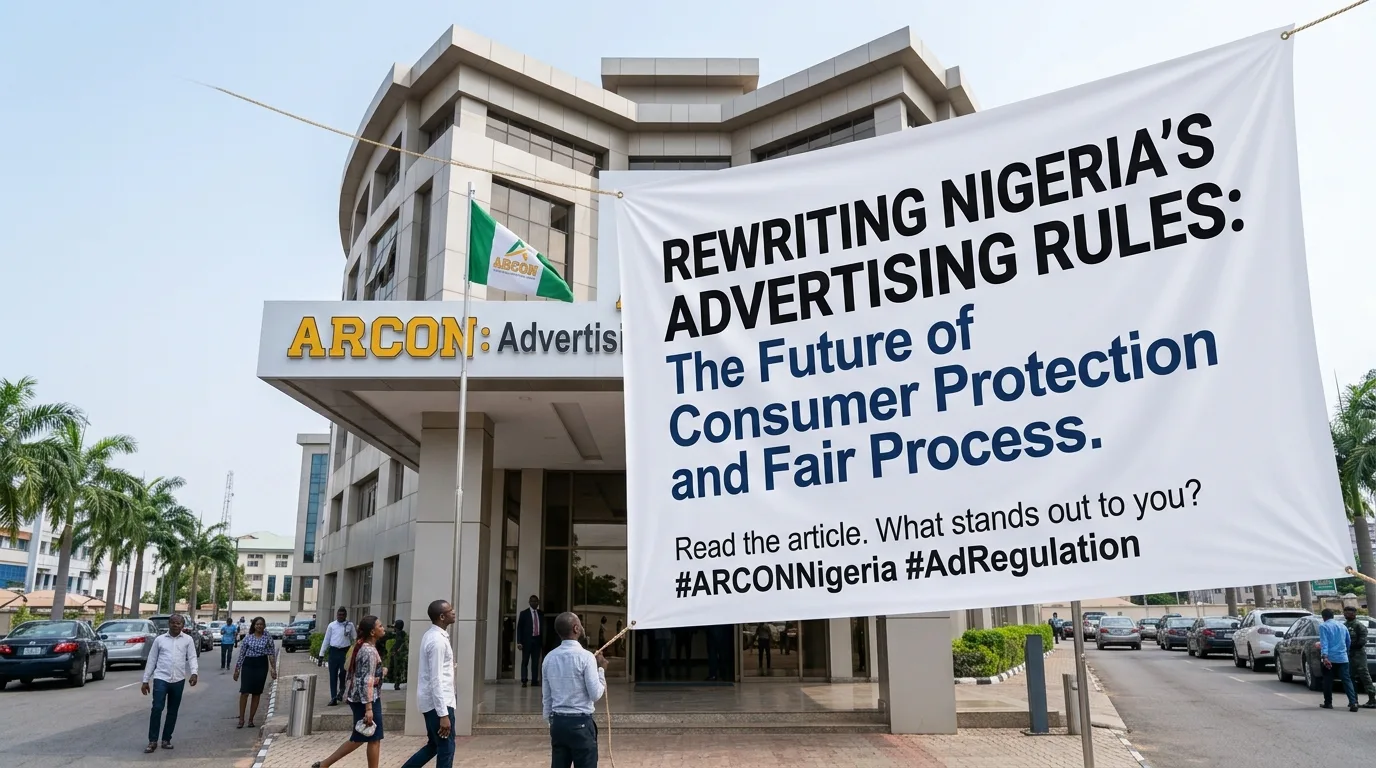
Half the world is rewriting its advertising rules at the moment, and reading the drafts next to each other, what stands out is how little anybody argues about the order of operations.
Start with the question a business actually asks, which is what you have to do somewhere else before you run an ad.
In the UK the answer is nothing. You need nobody's permission. The Advertising Standards Authority sets out why in its own words: there are many millions of non-broadcast ads published every year, so it would be impossible to check every one of them before they appear.
So you run yours, and if it misleads anybody they complain, the ASA investigates, and the ruling is published under your name in a database anyone can search. It handled over 40,000 complaints in 2025 and had 22,383 ads changed or withdrawn. It cannot fine you a naira. Pre-clearance in the UK covers television and radio only.
South Africa works the same way, complaints after the fact, with the Advertising Regulatory Board publishing its rulings every year since 2018 and no power to fine anybody either. Kenya asks for approval up front only where a specific harm sits, in gambling advertising.
You would think an inability to fine anybody leaves those two toothless. Publishing is the punishment. A company that gets named in public does not want it happening again, and a regulator that publishes is also a regulator you get to check.
The same instinct turns up somewhere less obvious, and it is worth a paragraph because it is the same question in a different domain. When the EU wrote its AI transparency rules, applicable from 2 August this year, it placed the duty on whoever builds or runs the system rather than on the people typing into it.
Anthropic signed that code and began marking Claude's text output 9 days later. South Africa got somewhere comparable by another road, spending 2 years on Google, Meta and X before Google committed R688 million to South African news media across 5 years. Different subject, same question underneath: who can actually carry this.
Nigeria has every reason to be in this conversation

None of which is an argument for leaving Nigerian advertising alone. Fake health cures, fraudulent investment offers and lying promotions do real damage here, at scale, and a market moving this fast cannot be left to sort itself out. ARCON has a legitimate job, and it is worth saying that plainly before saying anything else.
So the question worth asking is narrower than whether the rules should exist, and a good deal more practical. When you first run into this system, what do you find? A route you can follow, or a bill after the fact?
What ARCON approval costs, and who is allowed to file it
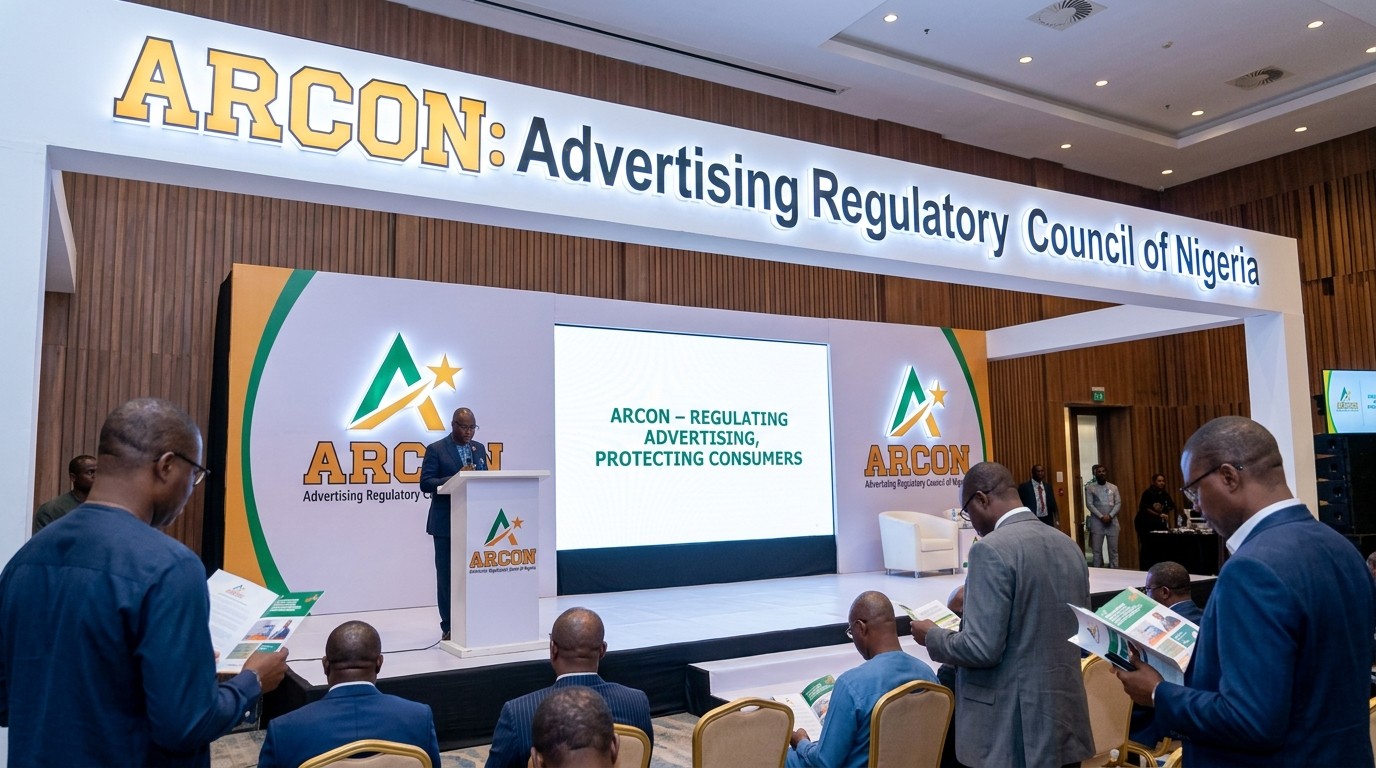
ARCON's published fee for vetting one online advert is ₦7,500. That is its own figure, from its own schedule, and it is not a lot of money.
Finding it is the hard part, though. The figure sits in a document the vetting page does not link to, and almost every article written on this subject says ₦20,000 to ₦35,000 instead, because the summaries have been copying each other for 2 years.
To be fair to the vetting page, it does more than it usually gets credit for. It explains that your application goes to the Director General with documents attached, that the panel which approves ads meets monthly, that you can pay to have it rushed in 4, 8 or 16 working hours, and that you can appeal if you are turned down.
All true and all useful. What it leaves out is the price, the form, the list of what to attach, how long the normal wait is, and any way of actually sending it. There is no website to upload to.
And then its opening line hands the job to somebody else. "Application is made by the advertising practitioner seeking approval to advertise." So you cannot file for yourself. You have to find one of the firms licensed to do it for you.
Those firms are listed, as it happens, in a third document, with no date on it, linked from nowhere you would think to look. 343 companies, by name, and not one phone number among them.
Which is where it stops being an inconvenience. 14 million Nigerian businesses traded on Meta's apps last year, on Meta's own figures. All of them reach compliance through those 343 doors, none of which publishes a way of being contacted, and behind the doors sits a panel that meets once a month. Anybody who wanted compliance would have done that sum first.
Taken one at a time, none of this is unusual. A monthly panel is defensible. Using licensed professionals is defensible. It is the combination, sitting behind a page that does not carry the price, that decides whether an ordinary business can take part at all.
And then set the whole thing against what the UK said. Checking every ad before it appears is impossible, because there are simply too many of them. That is a mature regulator with decades of case law, saying plainly that the job cannot be done.
ARCON's position is that it will check every advertisement, from every business, in Nigeria, through 343 licensed firms and a panel that sits twelve times a year. Before anybody asks whether ARCON is doing that well, the question is whether it is possible at all. It is not.
The ₦1 million demand, and how businesses get found
Then in March, BusinessDay reported that online businesses had been emailed demands of ₦1 million per advert. One had spent around ₦20,000 boosting posts over about 12 days. Another was asked for ₦3 million, covering 3 adverts.
Now, that reporting does not prove those demands ever became tribunal orders, that anyone paid, or that every business genuinely had not heard of the rule. All of them spoke anonymously, and that is worth saying plainly rather than glossing over. What it does show is how smaller businesses meet this system, which is after the advert is already live, by email, with 7 days on the clock.
Which raises the question nobody has asked, and ARCON answers part of it in its own guidelines. How did they find those particular businesses? There is an in-house monitoring unit, there are outside monitoring agencies, there are tip-offs from its own council and panel members, and there are reports from the public.
But those agencies are the firms that track television, radio, print and billboards. Not one of the 4 routes touches a social platform, and no monitoring software is named anywhere in the 12 documents ARCON publishes.
The demand emails said the adverts were "captured on Instagram." Somebody was looking at a phone.
Before that gets read as an accusation, nothing in the public record shows Meta, Google or TikTok handing over advertiser data, and nothing shows the Ad Library being used. That is not really the problem anyway. The problem is simpler and worse. A process that can cost you ₦1 million is invisible to the people it lands on, and ARCON has told the Foundation for Investigative Journalism it cannot even get Meta to return its calls, so nobody should assume the net is anywhere near complete. It reaches whoever happened to get noticed. Everybody else carries on doing exactly the same thing.
You might reasonably say: fine, argue back. Except arguing back is priced out of reach. Godec Power went to the Federal High Court in Lokoja, lost, and was ordered to pay ₦1 million in costs, which is precisely what ARCON asks for per advert.
Massilia Motors ran essentially the same argument in Lagos 5 days earlier and won ₦300,000. Two branches of one court, one question, opposite answers inside a week. Of the businesses fined this year, not one has gone to court, and on those odds it is hard to blame them.
Where the government's own scorecard lands
None of this is only visible from outside, either. PEBEC assessed 69 business-facing agencies in 2025 and put ARCON at the bottom of its published table, on 3%. That assessment measures the things you notice first: public information, published timelines, complaint response, whether the website works, whether you can apply online.
ARCON disputes the rating, of course, and it is entitled to. The score still matters, though, because it is the Federal Government's own record of how this agency looks to the people it regulates, and it matches what you find the moment you go looking.
Then there is the other side of the ledger. On consumer protection, 18 months of activity comes to 5 press statements. One was about a company advertising tea as making smoking healthy, opened on a petition in December 2024, and what happened to that company has never been published. There is no searchable list of panel decisions, no record of complaints received or resolved, no enforcement outcomes, no annual report. In 4 years, not one published ruling.
And that absence is what makes the consumer protection case impossible to see. The objective is sound. Nobody serious disputes it. But a regulator that never shows its work leaves you no way of telling protection from revenue, which is a problem it could fix in an afternoon and has chosen not to.
This is bigger than one council
If that sounds like a story about one badly run agency, watch what happened to Nigerian taxpayers in June. The Nigeria Revenue Service launched Rev360 to replace TaxPro Max, a platform meant to make filing easier and defaulters easier to find. Then on the 29th and 30th, with the company tax deadline running, it buckled. People could not log in, uploads failed, the system timed out.
Meanwhile the penalty for missing that deadline is ₦100,000 for the first month and ₦50,000 for every month after.
The Lagos Chamber of Commerce asked for an extension and a waiver, and its Director-General put the principle better than anyone has put it about ARCON: "Businesses should not be penalised for technological failures within government infrastructure over which they have no control."
Two different agencies, two different jobs, one design problem. The obligation and the penalty arrive fully built. The route that lets you actually comply arrives late, or half-built, or not at all.
Which is also why financial demands read the way they do. Nothing in the public record proves ARCON is in this for the money, and I am not going to pretend otherwise. But a clear route to comply is exactly how a regulator kills that suspicion, so not having one costs it more than it seems to realise.
The Facebook Nigeria judgment, and what it changed

All of which was already true before June, when the Federal High Court threw out ARCON's ₦60 billion notice against Facebook Nigeria Operations Limited.
The court found that ARCON had gone after a company it had not proved was responsible, had accused and fined it in the same breath without letting it answer, and had no power to hand out a fine at all before a court had convicted anybody.
The mandate survives that, mind, and so does the rule that adverts need approval first. What the judgment pushed to the centre is fair process, and it did so for a regulator whose demands to small businesses had used the same method the court had just examined.
Which is the real significance of the panel sworn in for the Advertising Offences Tribunal on 11 August. The Tribunal is not new. The Act set it up and a panel has existed since 2023, and ARCON has not claimed the timing answered anything, so that claim is not needed here. The point is simpler.
When a regulator gets stronger at punishing people, you need an equally good way of staying on the right side of it, or the weight of the tougher regime lands first on the businesses least able to carry it.
What should be published now?
You cannot call it regularisation when the first time a business learns the rule is when it is being fined for breaking it.
A single change would move more than the rest combined. Let a business below a set size file for itself, without a licensed practitioner, and 343 doors stop being a bottleneck the same afternoon.
After that, the rest is a fortnight of work. One dated price list on the vetting page. A free checker that tells you whether a given post needs approval at all. Clear evidence requirements printed on every notice, next to the route and the deadline for challenging it.
A correction window for a first, low-harm mistake. And a searchable record of decisions and outcomes, so consumer protection becomes something you can watch working instead of something you are asked to take on trust.
None of that needs new legislation. None of it weakens the mandate. It has been 4 years.
What to do if an ARCON demand arrives, and how to avoid one
What to do depends on what your advertising says, and the honest answer is not the same for everybody.
If your ads carry claims, about health, about money, about an outcome you are promising somebody, get them vetted. That is where the harm this rule exists for actually sits. It is also, on the evidence, what gets you reported: the two ARCON cases with a documented trigger both began with a complaint from the public rather than any monitoring sweep. A business making those claims would face the same scrutiny from the ASA or the ARB, and should.
For ordinary promotional advertising, the advice that circulates, get every post approved, describes something that cannot be done. 343 licensed filers and a panel that meets monthly cannot process 14 million advertisers, and it is worth being blunt that telling each of them to buy their way in treats a system-level failure as a personal one. What is proportionate is a record.
Keep screenshots of everything you run with the dates it ran, because that is the first thing any adviser will ask for, and know that the June judgment exists.
If a demand has already reached you, do not pay inside the 7 days and do not ignore it either. Take it to a lawyer this week with a single question. Given the judgment of 18 June 2026 in FHC/L/CS/2205/2024, is this demand enforceable.
None of that is a suggestion the requirement can be ignored. It is real, it applies, and the courts have confirmed the mandate while questioning the method. The point is narrower and it is the same one the whole piece has been making. A rule that 14 million businesses cannot physically comply with is not a compliance problem for them to solve. It is a design problem, and the list above is addressed to the people who can solve it.
Sources
- ARCON vetting procedure and Vetting Guidelines
- ARCON Act 2022
- BusinessDay, businesses react to reported ₦1m demands
- FIJ, ARCON and Meta on scam advertising
- Guardian, Facebook Nigeria judgment
- Vanguard, Massilia Motors judgment
- Brand Times, Godec Power judgment
- PEBEC reports and Arbiterz on the 2025 rankings
- Federal Ministry of Information, tribunal panel inauguration
- European Commission, Article 50 transparency obligations
- South African Competition Commission, Media and Digital Platforms Market Inquiry final report
- UK ASA rulings database and ARB rulings archive
- FIJ, Rev360 portal breakdown and Guardian, LCCI on Rev360