Regulation
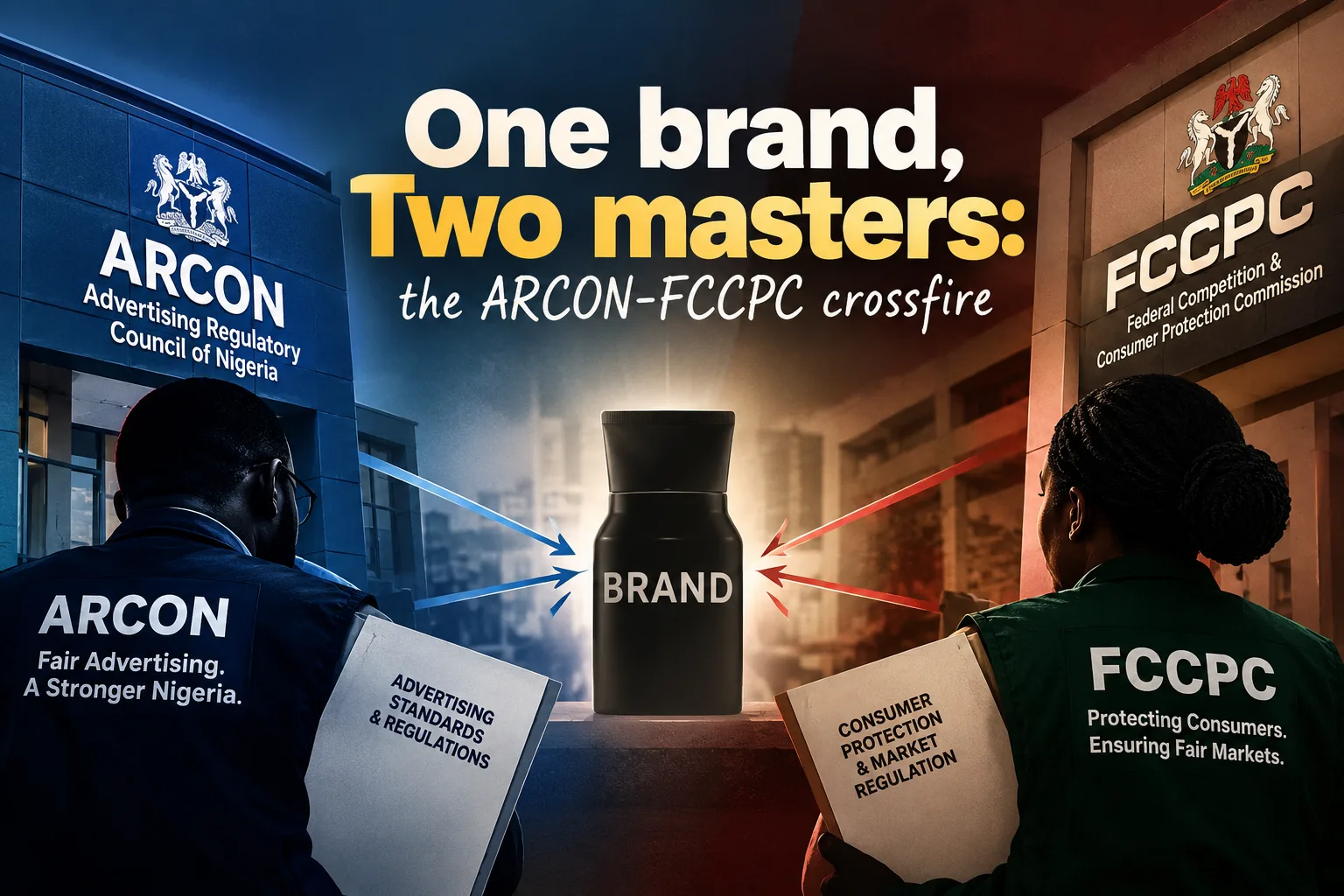
One brand, Two masters: the ARCON-FCCPC crossfire
We have been here before. Nigerian regulators often move on the same ground without talking to each other, and businesses in the middle end up answering to two rulebooks that don't agree. Picture a child whose parents have separated and who is told to choose. Pick Dad and Mum is upset. Pick Mum and Dad is upset. Nobody wins, and the child ends up losing on both ends.
6 October 2026
The FCCPC's draft did not fall from the sky. For months, Nigerian regulators have been closing in on online promotions and ads from several directions at once.
This year, ARCON, the Advertising Regulatory Council of Nigeria, has intensified enforcement of its pre-exposure vetting rule and stretched it to cover social media, influencer posts, sponsored content and even "unboxing"-style content. Fines of ₦1 million to ₦3 million per violation have landed on SMEs and agencies for unvetted Instagram and Facebook ads. The Advertisers Association of Nigeria (ADVAN) is not thrilled and has complained in an open letter to the President that vetting delays and fees are eating into ad spend.
Then came the deepfakes. On 15 September, ARCON warned the public about an AI-generated ad for a "Naira Refinery Investment Fund" on Facebook. It falsely borrowed the faces of President Tinubu, Taiwo Oyedele and Aliko Dangote, an endorsement lineup. ARCON has since set up a task force to watch digital ads more closely than ever.
Data and consumer protection have been busy too. On 25 September, a Lagos High Court ruled that consent for ad profiling cannot be buried in a platform's terms of service. Meta has appealed, and this follows the $32.8 million fine the Nigeria Data Protection Commission handed Meta in 2025. The FCCPC has also been visibly active on complaints, including a viral case where a customer got a refund within a week after filing a ticket against a business that had boldly declared "no refunds."
Put it all together, and the message is clear: regulators are watching. The FCCPC's draft is the next step, and it is the one aimed most directly at creators.
What the draft actually says
The FCCPC's new draft is being reported as an AI rulebook, but the clause that will matter most to Nigerian brands is about creators. On 30 September, the Federal Competition and Consumer Protection Commission released the Sales Promotion Regulations 2026 for comment.
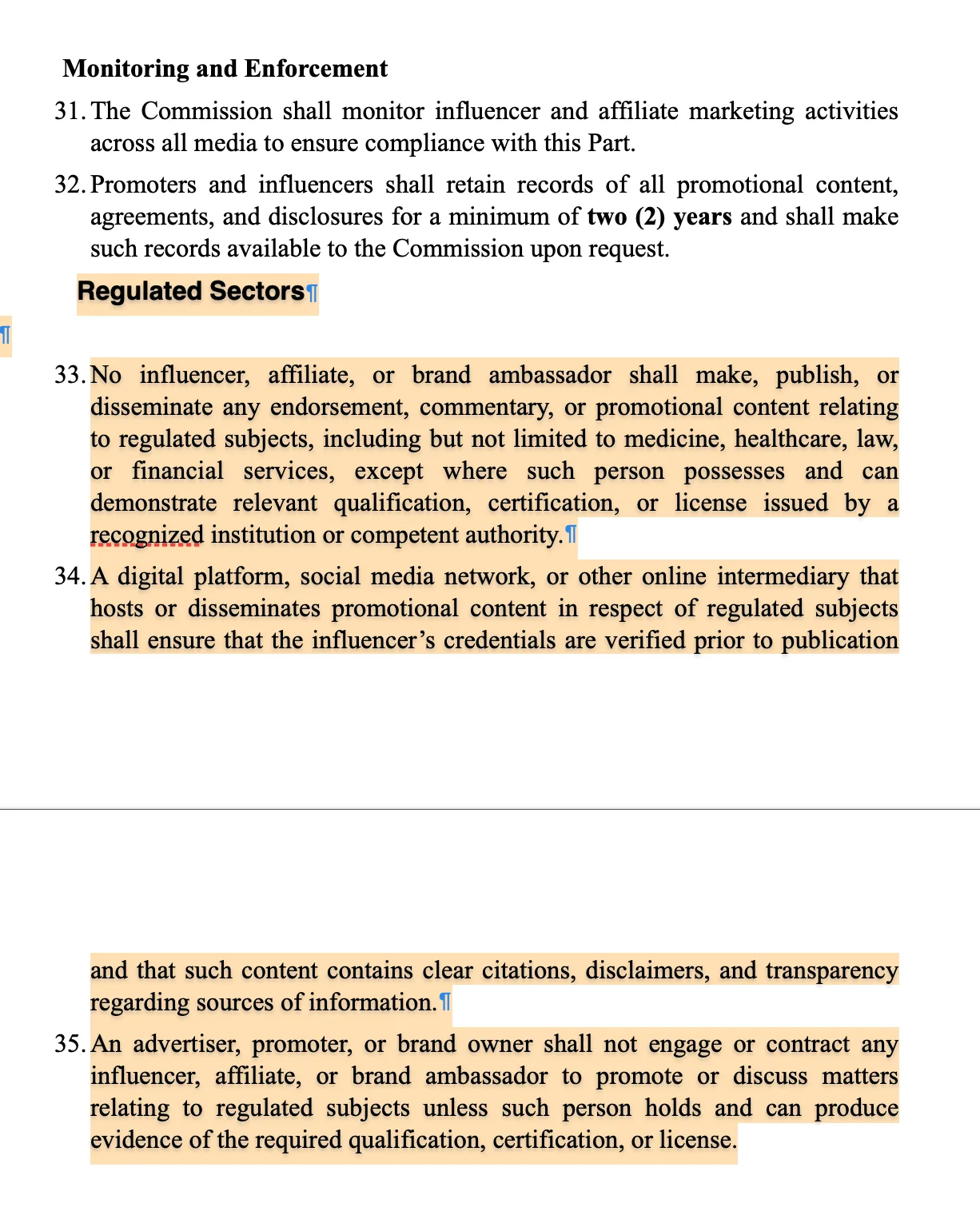
The clause that matters most to brands sits under a heading called Regulated Sectors. It bars any influencer, affiliate or brand ambassador from publishing content on "medicine, healthcare, law, or financial services" unless they hold a relevant qualification, certification or license.
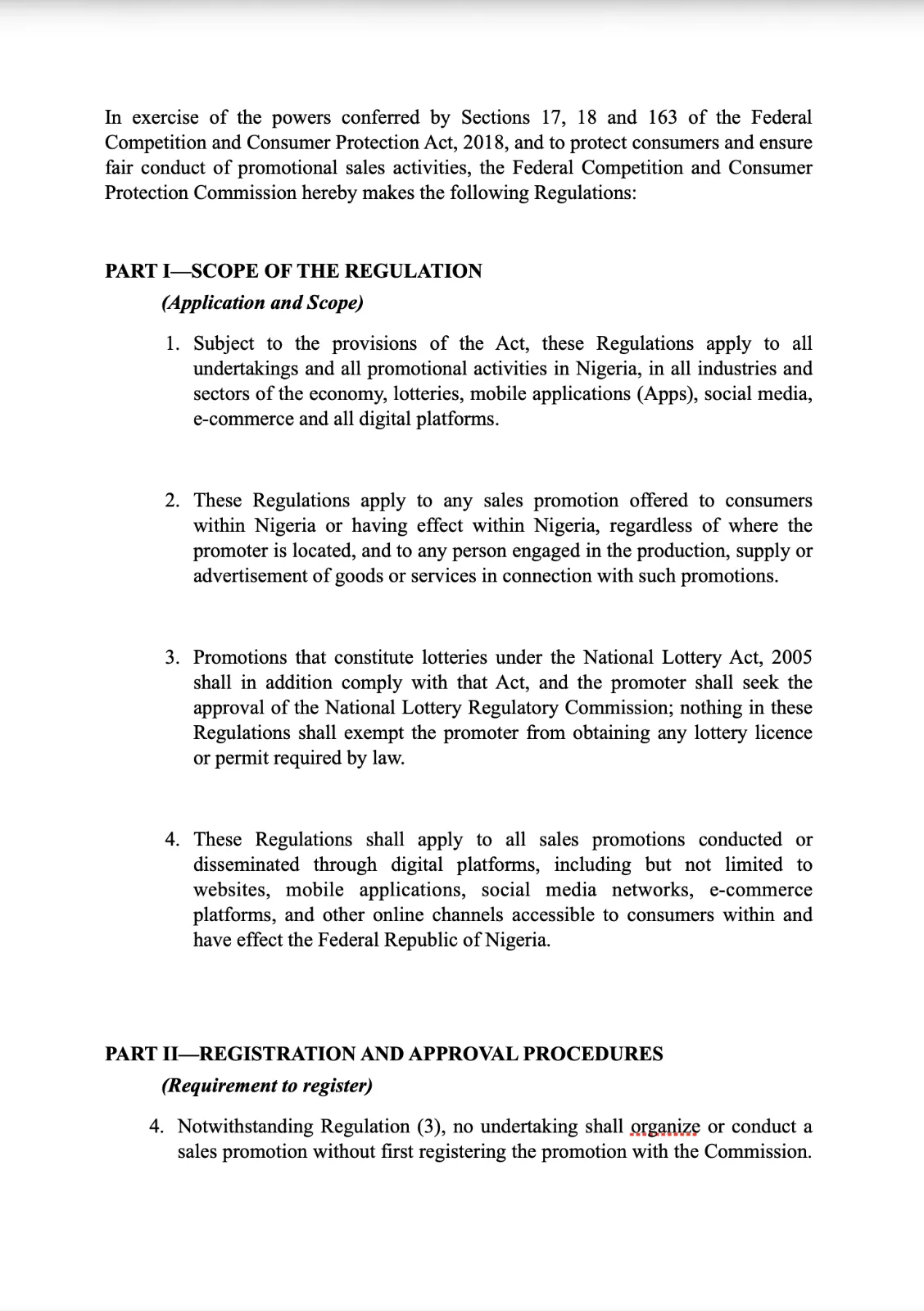
The next line hands enforcement to the platforms, which must verify a creator's credentials before that content goes live. Around it sit supporting rules. Paid relationships must be disclosed, promoters must keep their content, contracts and disclosures for two years, and any foreign company targeting Nigerians is treated as doing business here, with the FCCPC able to block its content.
Those are somewhat reasonable asks; the intent is right, and the part that will bite is the liability that lands on brands.
FCCPC has a fair point
The problem the FCCPC is pointing to is real, and anyone who has spent ten minutes on Nigerian social media has seen it. Forex signal sellers, crypto promoters, "doctors" with herbal cures for everything from fibroids to low sex drive, and get-rich schemes have all been pushed by creators with big followings.
The courts are seeing the same pattern from the other end. On 28 September, the Federal High Court in Lafia convicted 21 companies of running investment schemes without SEC licences and fined them ₦30 million each, for a total of ₦630 million. Schemes like those do not grow on their own. Somebody has to sell them in public, and it usually starts with a ring light.
Nigeria would not be the first country to go this way either. India's Advertising Standards Council has asked health and finance influencers to hold and show relevant qualifications since 2023.
So the instinct is defensible, and we would rather a regulator try to protect consumers than stand and watch, but is the FCCPC going too far with this draft?
Where The Draft goes too far
The words doing the damage are "commentary" and "including but not limited to."
Commentary covers far more than promotion, and the open-ended list means the subjects can keep growing. Read literally, the clause catches the nutritionist without a licence, the fitness coach talking about diet, and the creator who reviews a savings app. Even the friend who explains how to read a tenancy agreement is technically in trouble.

This could mean that anyone with a ring light could set it up and give their two cents easily. We saw the same thing happen in India, where in 2025 its council narrowed its own rule so qualifications are required only when an influencer gives technical information, not for generic or public service messages.
However, the FCCPC draft has no such limit.
If it goes through as written, it will be enforced against whoever is easiest to reach, and that is rarely the person selling fake cures from an account that changes its name every month.
FCCPC’s Ask from Meta seems ridiculous
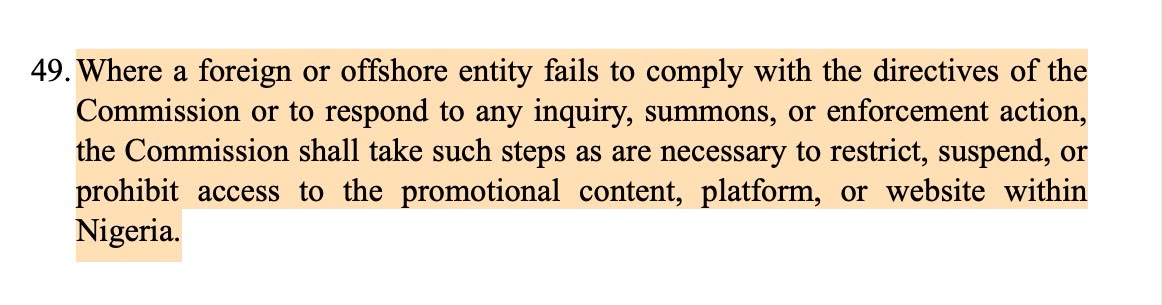
The platform clause is the part we do not believe will survive. Asking TikTok, Meta and Snapchat to check every creator’s certificate before a post on health, law or money goes live is close to impossible.
There is no known register of Nigerian creators to check against, no agreed list of which credentials count for which subject, and no way to know a post is about medicine until someone has read it.
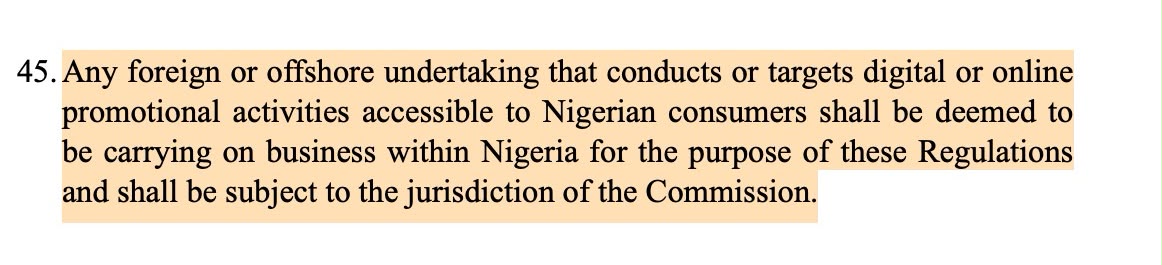
The draft also makes a platform that carries an illegal promotion jointly and severally liable, and it declares that any foreign company targeting Nigerians is doing business here, with the FCCPC able to block its content.
On paper, that is a lot of power. In practice, it only works if Meta and the others agree to play along.
Which we highly doubt.
We know how this may go. When push comes to shove, the platform hints that it can walk away from the market, the regulator softens, and the real terms get settled quietly in a room nobody reports from.
The European Union can make that threat ring hollow because its market is too big to leave. Nigeria's is not, and pretending otherwise produces rules that read well and go unenforced.
This is the part every brand should read twice.
Even if the platform clause is dropped, the liability clauses can stand, and they point straight at the brand. Regulation 28 makes the brand and the influencer jointly and severally liable for false claims, which means the regulator can pursue either one for the full breach. It does not need to chase the creator first, and a brand with a registered address and a bank account is far easier to find than a creator whose account changes its name monthly.
Regulation 19 applies the same logic to misleading online promotions, tying together the promoter, the platform and any intermediary. Everyone is invited to the party, and everyone gets the bill.
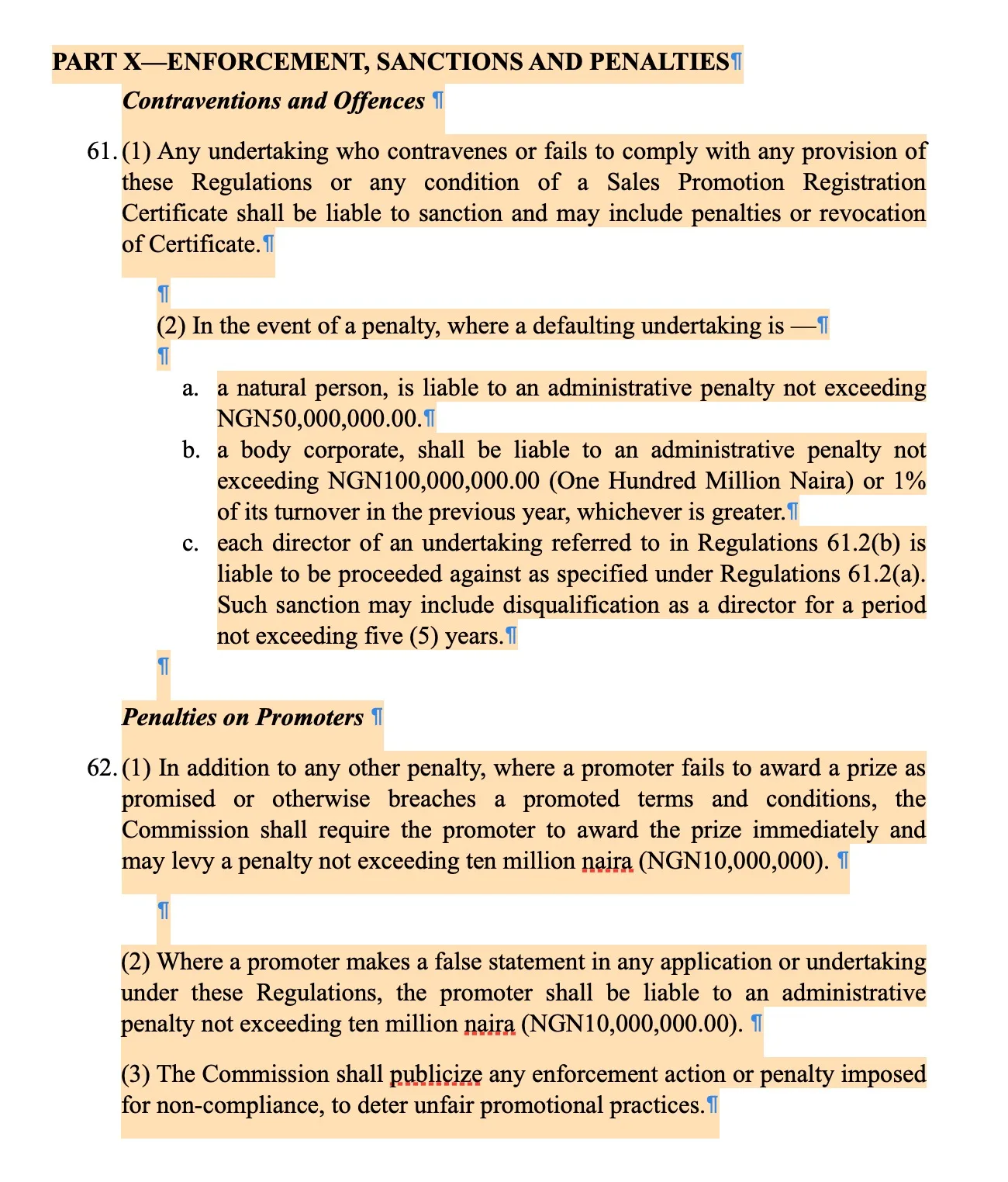
The penalties are heavier than most reports say. Nairametrics and Legit lead with "up to ₦100 million," but the draft says ₦100 million or 1% of the previous year's turnover, whichever is greater. So ₦100 million is the lowest cap, and any company turning over more than ₦10 billion a year faces a higher one. "Up to" turns out to be doing a lot of quiet work in those headlines.
Under Regulation 61, an individual in breach can be fined up to ₦50 million. Each director of a company in breach can also be fined up to ₦50 million personally and disqualified as a director for up to five years. Regulation 62 adds a further ₦10 million for failing to award a promised prize or making a false statement in an application.
The director line is the one we would underline twice. A marketing decision about which creator to hire can now end with a director paying out of pocket.
So, choose your brand ambassador as carefully as you would choose a co-signer.
Where It gets Interesting; Two regulators, one field
The fight we expect is not between the FCCPC and the creators or brand owners. It is between the FCCPC and ARCON, the country's statutory regulator for advertising.
The ARCON Act 2022 gives ARCON authority over commercial advertising and marketing communications, while the Federal Competition and Consumer Protection Act gives the FCCPC broad power over deceptive trade practices. Two agencies, one lane, and no one has agreed who holds the steering wheel. Without an agreement, a court may have to draw the line.
The timing of this news is hard to miss. ARCON is due to unveil its own framework for digital advertising and AI at the National Advertising Conference in Abuja, 11 to 13 November. It has not published what that framework says. The FCCPC released its draft roughly six weeks earlier, and nothing in it suggests the two bodies wrote their rules together.
When overlapping mandates clash, compliance becomes a moving target. Brands and agencies could soon find themselves in a costly legal tug-of-war, paying vetting fees and following ARCON formatting rules, only to face heavy FCCPC fines for missing a separate set of disclosure requirements. You can follow one rulebook perfectly and still be wrong in the eyes of the other.
Instead of creating a safer digital ecosystem, this friction creates administrative paralysis. It slows campaign turnaround, inflates legal overhead and discourages global brands from betting on Nigerian creators.
The uncertainty is especially painful for Nigeria's creator economy, a sector driven largely by young people building businesses without traditional institutional support. When two federal agencies impose separate pre-vetting processes, registration demands or penalty structures, micro-influencers and small digital agencies will be the first to be squeezed out.
There is still time to avoid a wreck
Before the November conference in Abuja, both agencies could set up a joint harmonisation committee. A unified digital advertising code, with one clear rulebook and a single compliance window, would protect consumers without punishing the industry that keeps the digital economy moving. It would also save everyone from reading two sets of fine print.
The fix does not need to be complicated. A few practical steps would go a long way:
- Agree who does what. ARCON could own advertising standards and content vetting, while the FCCPC focuses on consumer harm and deceptive practices. A short memorandum of understanding setting out that split would settle most of the turf war without a single court date. However, referees are cheaper than lawyers.
- Recognise each other's approvals. If a campaign has been vetted by ARCON and carries the right disclosures, the FCCPC should treat that as evidence of good faith, not as the start of a second inspection. Nobody should have to pass the same exam twice with two different examiners.
- Use one window. One portal, one set of forms, one timeline. A brand should be able to tell a regulator "here is everything" in one place, not assemble two filing cabinets.
- Protect the brands that comply. A safe harbour for companies that vet their content, disclose every paid relationship and keep their records would reward the people doing it right. Right now, the draft's liability clauses punish the tidy and the sloppy alike.
- Give the market time to adjust. A sensible transition period would let agencies and creators update contracts and workflows before the fines start. Rules that arrive with a grace period tend to get followed. Rules that arrive with a ₦100 million penalty and no warning tend to get lawyered.
- Put the industry in the room. ADVAN, agencies, creators and the platforms all have to live with whatever comes out. Inviting them to the committee now is cheaper than hearing their complaints in an open letter later.
None of this would weaken the rules. It would make them easier to follow, which is the only way they get followed.
If that does not happen, the brands that tried to comply will pay for the confusion. The bad actors and fraudulent schemes the rules were meant to stop will carry on, probably under a new username.
What a brand should do now
This is a draft, and yes, drafts change. But the direction is clear, and a brand in health, law or finance should not wait for the final text to get its house in order.
Make a list of everyone who speaks for you in paid or gifted content. Next to each name, write what qualification they hold, if any, and what exactly they say about your product. If the answer to the first question is "a ring light" and the answer to the second is "miracle cure," you have found your first problem.
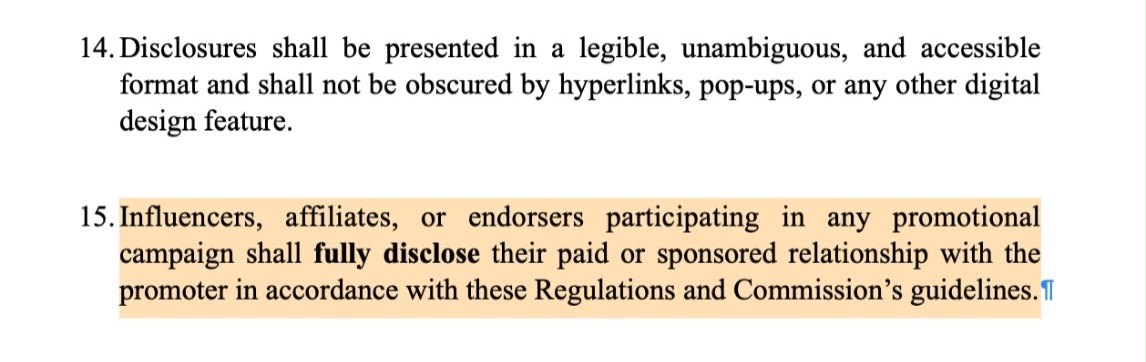
Now it's time to fix the paperwork. Prepare for the day a regulator asks. Disclose every paid relationship on the post itself, and keep every brief, contract and disclosure for at least two years. If a creator is making claims your own medical, legal or compliance team would not sign off on, that content should come down now. Under Regulation 28, their claim is your claim, and you will be the one explaining it.
The draft is open for comment, and the clauses on commentary and platform checks are exactly where industry input can turn the rule into something enforceable. Silence is not neutral here. It is just a decision to let other people write your rulebook.
Conclusion
Two things can still go right. Before the Abuja conference, ARCON and the FCCPC can agree on a single digital advertising code with one compliance window. And the FCCPC can narrow its credentials clause so that it targets technical claims, as India's council did, not every comment on health, law or money.
If neither happens, the cost will not fall on the people the rules were written for. A fake doctor can open a new account in an afternoon. A brand with a registered address, a bank account and a board cannot. It will pay for the confusion, and its directors may pay personally.
That is why a brand should not wait for the regulators to settle this. Know who speaks for you, keep the paperwork, and send your comments before the window closes. We support what the FCCPC is trying to do. The draft needs more work before it becomes law, and it needs to fit with what ARCON is about to say. Two rulebooks may be a good problem for a library, but they are a bad one for a brand.
Sources
- Nairametrics: FCCPC moves to regulate AI marketing, businesses face N100 million penalty
- Legit.ng: FCCPC proposes new AI marketing rules, violators to face N100 million fine
- Nairametrics: 21 companies fined N30 million each for operating without SEC licences
- ASCI: Health and finance influencer guidelines update (press release, 2023)
- Newslaundry: ASCI tweaks guidelines for health, business influencers for "public service, generic" messages
- Marketing Edge: ARCON set to unveil digital advertising and AI framework at NAC 2026
- BusinessDay: ARCON fines businesses N1m for unapproved online ads (subscription required)
- Brand Times: ADVAN writes open letter to Presidency demanding reform of ARCON's practices
- Leadership: AI deepfake, ARCON warns Nigerians over fake Naira Refinery Investment Fund
- PPC Land: Meta loses Nigerian privacy suit over behavioural ads, must pay $100,000
- Techpoint Africa: Meta, NDPC agree out-of-court settlement of $32.8 million fine