Marketing Strategy
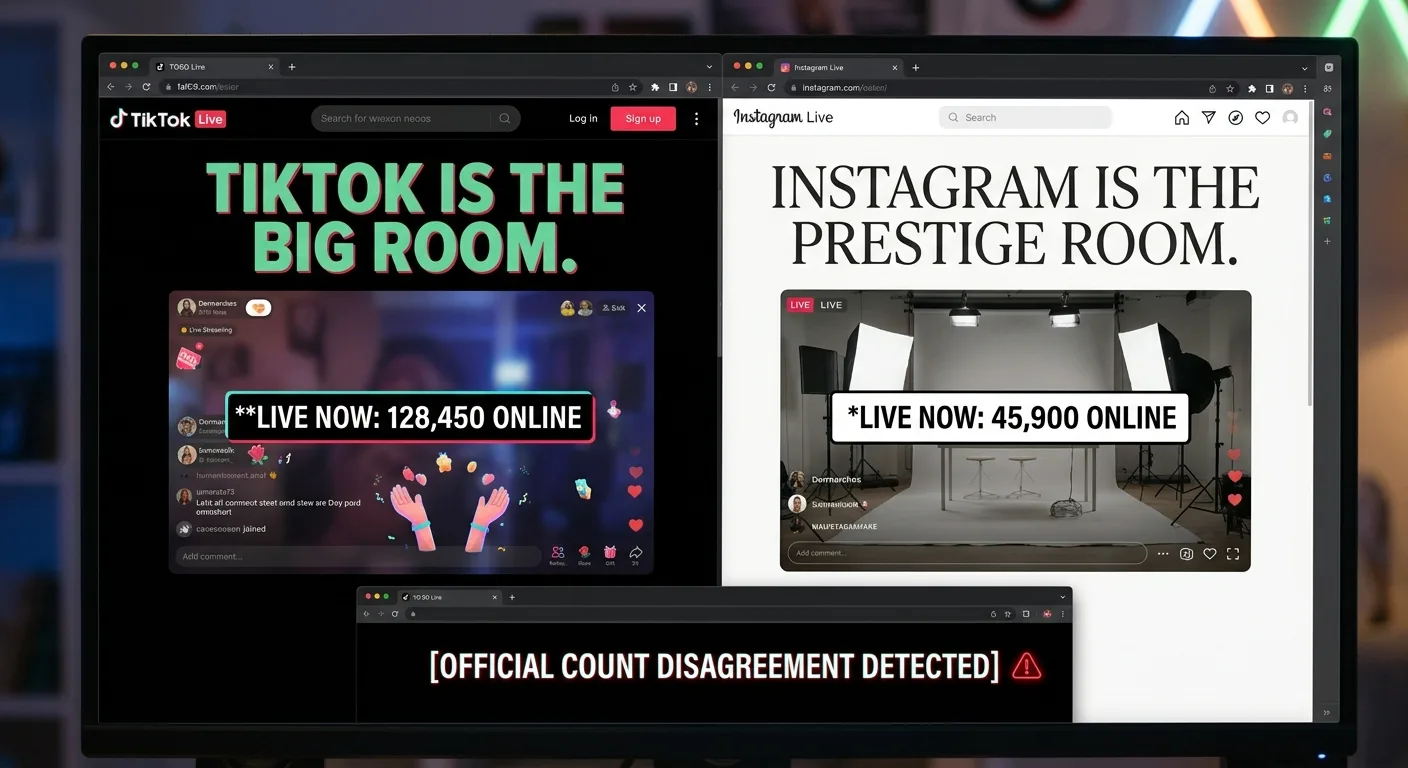
TikTok is the big room, Instagram is the prestige room, and the two official counts of who is online disagree
For a decade, Nigerian business treated Instagram as the door into the market. It was the display window for the 10 million who had already arrived, while the rest of the country built a room of its own on TikTok, where nobody needs to know your name before you can be found.
17 September 2026
For about ten years, Nigerian businesses ran on a shared belief about Instagram, and almost nobody said it out loud because nobody needed to. Instagram was the market. If you wanted customers, you opened a page. If you wanted to be taken seriously, you made the page look like a real business, with a logo, a matching grid, and a shoot. If you had money, you paid an influencer to post you. The whole apparatus of Nigerian marketing- the agencies, the content houses, the influencer price lists, the "grow your page" courses- was built on the idea that the door into the Nigerian market had an Instagram logo on it, and that discovery, the moment a stranger first finds you, happened there.
That is what we thought Instagram was. It is worth being honest about what it was actually meant to be, and what it turned into here.
Instagram was built as a place to show. It began as a photo app, and it became the place where a person or a business presents the finished version of itself to people who already follow it.
That is the design. You follow, then you see. The app has spent the last five years bolting recommendation onto that design, and it has got good at it, but a place built for showing is not a place built for finding, and in Nigeria it never became one. What it became is the room you go to once you have arrived. It is the shopfront a serious buyer opens to check you are real, the DM where an order gets placed, the grid where a founder proves the business is a business now. That is a real and valuable job. It is a job for people who are already visible, and it is done for an audience that already knows them.
The problem is that the country isn't made up of people who are already visible. It is made of people starting from nothing, selling, making and talking, with no followers and no budget, and half of them not yet 19. For a decade, the market told them the way in was to build an Instagram page and wait to be noticed. Meanwhile, they went and built a room of their own, somewhere that would let them in without knowing their name, and the room they built is now five times the size of the one everyone was queuing for.
The numbers, as far as they go
DataReportal's Digital 2026 report on Nigeria, on data to October 2025, puts TikTok's advertising audience at 47.8 million adults. Instagram's is 10.0 million. Facebook sits at 38.0 million, YouTube at 30.5 million and Snapchat, which almost nobody in Nigerian marketing plans for, at 23.0 million. These are the platforms' own estimates of how many people an advert could reach rather than counts of human beings, and TikTok's figure counts adults only while Meta's counts from age 13, so if anything the gap is understated.
The figure that matters is not the gap. It is the line behind it. Instagram’s audience in Nigeria was 9.05 million in January 2022, and it is 10.0 million now, so it has sat at roughly ten million for four years while TikTok's went from 23.84 million in January 2024 to 47.8 million in October 2025. Instagram did not fall, and it did not lose Nigeria, because most of Nigeria was never there. It held its ten million, which is about what a display window for the already-visible should hold, and the rest of the country went next door. The report itself warns against reading a fall in reported reach as people leaving, and the honest sentence on Instagram is flat, not shrinking.
This piece is about why the bigger room got built where it did, and who built it.
The room that lets you in without knowing your name
In June 2020, TikTok published an explanation of how its For You feed works, and one sentence in it decided the next five years in Nigeria. "Neither follower count nor whether the account has had previous high-performing videos are direct factors in the recommendation system." A video gets shown to people who share an interest in what it is about, whether or not they have ever heard of the person who made it.
Instagram was built the other way round. You followed people, and you saw what they posted. To be seen, you first had to be known. In 2021, Adam Mosseri, who runs Instagram, went on camera to say the app was “no longer a photo sharing app" and would move toward "full screen, immersive, entertaining, mobile-first video", and Instagram has spent the years since bolting recommendation onto a network that was built on following. It's gotten much better at it. But it started from behind, and it started from behind at exactly the moment the Nigerian market was deciding where to go.
Think about who makes up that market. A country with a median age around 18, full of people selling things, making things and saying things, almost all of them starting from zero followers. For a person like that, a platform where nobody knows you and you can still be found tomorrow is worth more than a platform where you must first buy or earn an audience. So the makers went where they could be found, and the audience followed.
You can see it in the people, and the first of them had no strategy at all. On 3 June 2024, a young hawker called Alax Evalsam posted a video of himself selling fish pie on a Lagos street, singing "nawa o" over the traffic as he went. He had no following. By the end of August, that video had been watched 16 million times, liked 1.6 million times and shared more than 116,000 times; a second one had passed 18 million, he had 880,000 followers, and a comedian had paid his rent. Nothing in the Instagram model allows for that, because the Instagram model needs you to be somebody before it shows you to anybody.
Habeeb Hamzat, known as Peller, started streaming in 2021, copying the American streamers he liked, and for two years almost nobody watched. On 30 October 2024, Davido walked into his TikTok LIVE and, by TikTok's own count in its Year on TikTok report, 389,800 people were watching, the most-watched livestream in Africa that year. Asked about the money, Peller has been more honest than most. On the Davido night, he corrected a rumour that he had made $400,000: "Na just 359k coin people send on the live and that's less than 2m naira." His biggest night, he said in December, was ₦10 million. A boy from Ikorodu who could not get an audience for two years is now the most famous live streamer on the continent, and he never needed anyone's permission.
Chioma Anyanwu, who posts as Anchi Vibes, left a customer-service job at a bank and, in her words, "stayed at home for one year just doing nothing after I resigned.” In February 2025, TikTok named her Creator of the Year for the whole of Sub-Saharan Africa.
Fido was running an event centre in Matogun, on the edge of Ogun State, when he released a song called “Joy Is Coming" in December 2024. It went round TikTok, reached number one on Apple Music Nigeria and number five on Billboard's US Afrobeats chart, and Funke Akindele and Davido joined the trend, all of it while he was still independent, because nobody had signed him first.
Three young men, Boypee, Hyce, and Brown Joel, released "Ogechi" in May 2024. Davido remixed it a month later, it went to number one on TurnTable's Top 100, stayed on the chart for 32 weeks and was the most-searched lyric in Nigeria that year. TikTok gave them Breakthrough Artist of the Year.
And it is not only the famous. In January 2025, TechCabal spent time with the traders who sell on TikTok LIVE. Koforowola Adedeji sells thrift from Abule-Egba: "On some days, I make ₦70,000." Maryam Musa runs a fashion brand: "In December, I was very consistent, and I made over ₦500,000 in three nights." Jude Okafor sells jeans to about 200 people watching at a time, three nights a week, four or five hours a night, and has no shop: "I don't have a shop, so I get sales mostly from TikTok." TikTok Shop is not even available in Nigeria. They close the sale in the DMs and on WhatsApp. The platform gave them the crowd; they built the till themselves.
None of those people would have been found on Instagram in 2021, and not because Instagram is bad. It is because Instagram needed them to be somebody first, and the whole point is that they weren't.
The room was empty until Nigerians filled it, and nobody paid them to
A platform is only a discovery platform if there is something on it people want to discover. What made TikTok the place Nigerians open is that Nigerians filled it, and the world noticed.
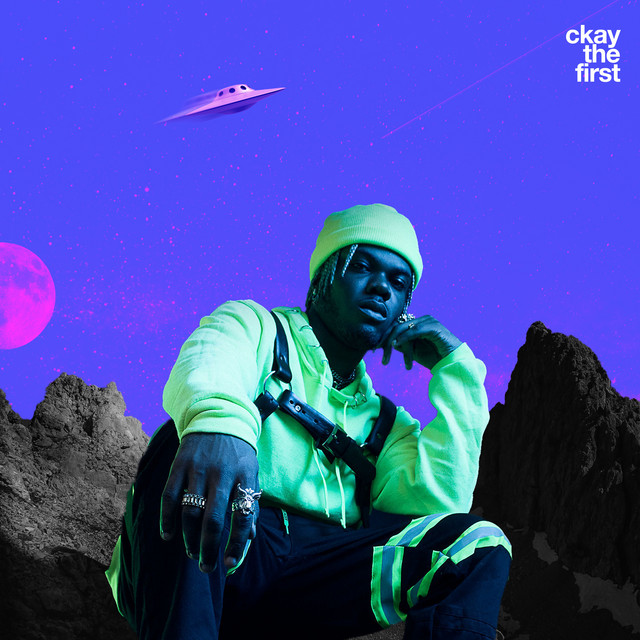
In 2019 a young artist called CKay released "Love Nwantiti" to little attention. In 2021, it caught on TikTok, and by November TikTok's own newsroom was reporting more than 136 million views and 50,000 videos made to the song, the most-Shazamed track in the world for a stretch that autumn, charting in 160 countries. When Billboard launched its first US Afrobeats chart in 2022, "Love Nwantiti" was number one. TikTok itself called it "proof that TikTok is a great platform for artist discovery and promotion", which is a platform congratulating itself on a Nigerian's work, but the point stands.
Then it kept happening, year after year. In 2022 Kizz Daniel's "Buga" was the most-searched song on Google in Nigeria, and the whole country was doing the dance. Pheelz's "Finesse" became the most-Shazamed song in the world within days of release. In 2023, Shallipopi, who had been posting freestyles on TikTok since 2015, broke with "Elon Musk" and went to number one with his debut album. Fans in Owerri created KCee's "Ojapiano" dance, and KCee flew them to Lagos to perform it. By the summer of 2025, TikTok's official Song of the Summer for Nigeria was "Wasiu Ayinde" by BhadBoi OML, a Fuji-referencing record by an artist most of the industry had never heard of, ahead of Davido. That is not a global trend landing in Nigeria. That is Nigeria's own sound, in its own languages, setting the platform's chart.
The people were the same story. When TikTok gave out its Sub-Saharan Africa awards in December 2025, Nigerians took six of the ten. Creator of the Year went to Raja'atu Muhammed Ibrahim, who posts as Diary of a Northern Cook, making northern Nigerian food for a continent. TikTok's own head of content for the region, Boniswa Sidwaba, said: "With Nigerian creators securing six of the ten awards, we are honoured to celebrate their impact, especially as the TikTok community voted for these victories." The community voted, which means Nigerian taste set the agenda for the whole continent.
Here is the detail that should make every marketer in Lagos stop. TikTok does not pay these people. Its Creator Rewards Program, the scheme that pays creators in the US and Europe for views, does not include Nigeria or any African country. Meta's own creator payouts only arrived in Nigeria in July 2024, and only for Facebook. So the biggest creator culture on the continent was built by people who were paid by the crowd, in LIVE gifts and brand deals, and not by the platform. They did it because they could be found, and because the audience that found them looked and sounded like them.
Which brings us to the register. Back in July 2019, long before any of these numbers moved, Techpoint asked young Nigerians why they were drifting from Instagram to this new app. One said: "Instagram is just filled with a lot of things but TikTok has one purpose: make your video." Another said something that explains the whole shift in one line: "with TikTok, I felt nobody knew me so I was free to express myself. It is more like a safe space." Our own research this June found the same thing inside Instagram itself. The Nigerian feed rewards a person you feel you know being funny, in Pidgin, in a real room, over a brand performing competence. Anakle, a Lagos agency with about 5,000 followers, put up an office-humour reel that was watched 586,107 times. The polished announcement posts from serious firms sat at 4 likes. TikTok's whole culture is that register by default, and Instagram has had to learn it late.
So what is Instagram for

Which brings us back to where we started. Instagram is the room you go to once you have arrived, and that is not an insult. It is the job.
That 2019 quote already had it: Instagram is "filled with a lot of things." It is where the brand shoot goes, where the finished thing is displayed, where the grid has to match, where a business shows the market that it is a real business now. It is where you get admired, and being admired is a different job from being found. The mistake of the last ten years was not being on Instagram. It was asking Instagram to do the finding.
You can watch the two jobs split in one career. Isaac Olayiwola, who performs as Layi Wasabi, had his first viral video on TikTok in 2020. He then built his real following on Instagram, from 300,000 to more than 2 million between 2023 and 2024, won Best Content Creator at the AMVCAs and moved into Nollywood. He was found on TikTok and dressed on Instagram, and that pattern, discovered in the big room and then presented in the prestige room, is now how a great many Nigerian careers run. It is also how the two platforms actually relate to each other: they are not rivals for the same job, because one finds you and the other frames you.
Prestige also explains why Instagram has held its ten million so steadily. It is where Nigerians actually sell. The DM that becomes an order, the page that works as a shopfront, the comment section that closes the deal. A serious buyer goes to your Instagram to check that you are real, and that is a valuable job. It's not the job of getting in front of people who have never heard of you, and for a decade the whole market behaved as if it were.
The clearest proof that this is habit, not reason, is Snapchat. It reaches 23 million Nigerians, more than double Instagram, and gets almost no brand budget, for the simple reason that the people who write the budgets do not use it. The money follows where the marketer feels at home, not where the market went.
What this means if you run a business
It does not mean leave Instagram. It means stop asking Instagram to do a job it was never good at, and stop spending your discovery effort in a room that needs you to be known before it will show you to anyone.
There are two jobs, being found and being trusted, and they happen in different rooms. In Nigeria today, being found happens on TikTok, for the reasons above, and it happens for people with no followers and no budget, which is most of the country. Trust still happens on Instagram, in the DMs, in the WhatsApp chat, and on the page a buyer opens to check you are real. Build for both, in that order, and stop pretending one room does both.
Then take the register seriously, because the thing that travels on TikTok is you, doing the thing you actually do, in the way you actually talk. The fish-pie seller did not have a content strategy; he had a song and a street. The jeans trader did not have a shop; he had four hours a night and 200 people who trusted him. If you speak Pidgin, speak Pidgin. If your workshop is loud, let it be loud. Keep the polished version for the prestige room, where it belongs, and put it there after people have found you, not instead of being found.
And here is something to do on Monday that costs nothing. Pick the one thing your business does that a stranger would find interesting to watch. Film it plainly on your phone, five times this week, and post all five on TikTok without checking any of them against your Instagram grid.
Watch which one strangers arrive on, and read what they say in the comments, because that is your market telling you what it wants to discover. Then make sure every one of those strangers can find their way to the room where you close, and write their numbers down somewhere that belongs to you, because the rooms are rented and the landlord is not you, which is a point we made when Nigeria's regulators went after Meta, Google and X.
So the belief we started with was half right. Instagram is where you go to look successful, and for the ten million already there, it does that job well. It was never where Nigeria went to be found, because most of Nigeria was never let in. When a room opened that didn't ask for a name at the door, the country walked in and painted the walls, and the industry still guarding the old door took four years to notice.
Sources
DataReportal, Digital 2026: Nigeria (data to October 2025, published November 2025): https://datareportal.com/reports/digital-2026-nigeria. Digital 2024: https://datareportal.com/reports/digital-2024-nigeria. Digital 2022: https://datareportal.com/reports/digital-2022-nigeria
TikTok, How TikTok recommends videos #ForYou, 18 June 2020: https://newsroom.tiktok.com/en-us/how-tiktok-recommends-videos-for-you
Adam Mosseri, 30 June 2021, via Search Engine Journal: https://www.searchenginejournal.com/instagram-were-no-longer-a-photo-sharing-app/412194/
TheCable Lifestyle on Alax Evalsam, 29 August 2024: https://lifestyle.thecable.ng/spotlight-alax-evalsam-the-fish-pie-seller-whos-got-nigerians-singing-nawa-o/
TikTok, Year on TikTok 2024 Sub-Saharan Africa (Peller and Davido, 389,800 viewers): https://newsroom.tiktok.com/en-africa/yott-24-ssa
Legit.ng, Peller on the Davido LIVE earnings, 4 November 2024, and on his biggest night, 23 December 2024: https://www.legit.ng/entertainment/celebrities/1632276-peller-shares-highest-amount-tiktok-live-night-video-trends-how-work/
Pulse Nigeria interview with Anchi Vibes, February 2025: https://www.pulse.ng/articles/lifestyle/anchi-talks-creativity-growth-and-winning-tiktoks-creator-of-the-year-award-pulse-interview-2025021922443961960
TikTok Awards SSA 2024 (held 8 February 2025): https://newsroom.tiktok.com/en-africa/tiktok-awards-ssa-2024
Premium Times on Fido, 20 January 2025: https://www.premiumtimesng.com/entertainment/music/768165-spotlight-meet-viral-joy-is-coming-singer-fido.html
TechCabal, TikTok Live is Nigeria's new marketplace, 24 January 2025: https://techcabal.com/2025/01/24/tiktok-live-business-owners/
TikTok newsroom on the #LoveNwantiti challenge, 9 November 2021: https://newsroom.tiktok.com/tiktok-challenge-launches-nigerian-artist-ckay-us?lang=en. Billboard on the first US Afrobeats Songs chart: https://www.billboard.com/music/chart-beat/ckays-love-nwantiti-tops-first-billboard-us-afrobeats-songs-chart-1235050658/
Pulse on "Buga" as Google's most-searched song in Nigeria 2022: https://www.pulse.ng/entertainment/music/kizz-daniels-buga-is-the-most-searched-song-on-google-in-2022/nvpx9v6
African Arguments on Pheelz and 1da Banton, June 2022: https://africanarguments.org/2022/06/how-to-become-an-overnight-afrobeats-star-tiktok/
TurnTable Charts and Guardian Nigeria on TikTok's Nigeria Song of the Summer 2025: https://www.turntablecharts.com/news/1960 ; https://guardian.ng/life/music/wasiu-ayinde-tops-tiktok-nigerias-songs-of-the-summer-2025/
BusinessDay on TikTok Awards SSA 2025, 11 December 2025: https://businessday.ng/life-arts/article/nigerian-content-creators-dominate-tiktok-awards-for-sub-saharan-africa/
Legit.ng on TikTok monetisation in Nigeria, 12 November 2025 (secondary; TikTok's eligibility page could not be fetched): https://www.legit.ng/ask-legit/guides/1680596-does-tiktok-pay-nigerian-creators-how-monetize-tiktok-nigeria/
Nairametrics on Meta creator monetisation for Nigeria and Ghana, 1 July 2024: https://nairametrics.com/2024/07/01/meta-says-nigerian-ghanaian-content-creators-can-now-earn-money-on-facebook/
Techpoint, How TikTok is slowly snatching young Nigerians from Instagram, 2 July 2019: https://techpoint.africa/2019/07/02/the-rise-of-tiktok-in-nigeria/
TechCabal on Layi Wasabi, 16 May 2024: https://techcabal.com/2024/05/16/layi-wasabi-a-flourishing-career-in-content/